
Learn how to discover Madrid beyond museums through private neighborhoods, late-afternoon views, local flavors, and a tailored classic-car experience.
Madrid reveals its finest scenes between destinations: the first light on limestone façades, the quiet grandeur of an old square before lunch, the glow of Gran Vía as evening arrives. For travelers asking how to discover Madrid beyond museums, the answer is not simply to add more places to an itinerary. It is to move through the city with time, privacy, and a sense of occasion.
The Prado, Reina Sofía, and Thyssen-Bornemisza deserve their reputations. Yet the capital's character is also found in its street corners, long lunches, elegant residential avenues, and the conversations that rise from terrace tables after sunset. Madrid is a city best understood in motion, not hurriedly checked off.
How to Discover Madrid Beyond Museums: Follow the City's Rhythm
A memorable Madrid day begins by choosing fewer neighborhoods and experiencing them more fully. The historic center is compact, but its atmosphere changes remarkably from one district to the next. A private route makes that contrast visible without the fatigue of a large-group walking schedule or the impersonality of a conventional bus tour.
Start in Madrid de los Austrias, where royal-era streets narrow around Plaza de la Villa and the edges of Plaza Mayor. This is not only a place for photographs. Pause to notice the wrought-iron balconies, weathered stone, and small passages that still carry the proportions of Habsburg Madrid. Morning is especially appealing here, before the center reaches its daily crescendo.
From there, La Latina brings a different energy. Its sloping lanes, tiled façades, and market culture feel more intimate and less formal. On a Sunday, the El Rastro area offers color and movement, though it also draws crowds. For guests who value a quieter experience, a weekday route provides the same architectural charm with room to linger, stop for a coffee, or photograph a doorway without a stream of passersby behind it.
Barrio de las Letras is equally rewarding, particularly for travelers drawn to literary history and refined city life. The streets once associated with Cervantes, Lope de Vega, and their contemporaries now lead to thoughtful boutiques, polished bars, and handsome façades. Here, Madrid feels cultured without feeling staged.
Choose Views That Change With the Hour
Madrid's beauty is closely tied to its extraordinary light. The city sits high above sea level, and its clear skies give even familiar landmarks a crisp, cinematic presence. Timing matters as much as location.
Retiro Park is best treated as a pause rather than an attraction to rush through. A private stroll near the rose garden or the Palacio de Cristal can be restorative after a morning in the city center. It is ideal for couples celebrating an anniversary, families wanting a gentler pace, or guests who simply prefer trees and water to another indoor visit.
Later in the day, the Temple of Debod offers one of Madrid's most distinctive perspectives. The ancient Egyptian monument is compelling in itself, but its setting is the real pleasure: open sky, broad western views, and a sunset that softens the city into shades of gold and pale rose. It can be busy at peak sunset, so arriving a little earlier is often the more elegant choice.
Gran Vía, by contrast, comes alive after dark. Its early-20th-century architecture, theater marquees, and illuminated façades create a sense of scale that feels both grand and intimate from the right vantage point. Rather than walking its full length with the crowds, see it as part of a considered evening route, with time for a relaxed dinner afterward.
Let Food Set the Pace
The most convincing way to know Madrid is often through a table. The city is not defined by one signature dish as much as by its appetite for unhurried social life. A late breakfast, an aperitif, a proper lunch, or an evening drink can reveal as much about local culture as a formal landmark.
In the historic center, seek atmosphere over novelty. A classic counter, a shaded terrace, or a restaurant with a room that invites conversation will usually serve the moment better than the most photographed address. Traditional options such as tortilla española, croquetas, jamón ibérico, and grilled seafood are best enjoyed slowly and shared. For something sweet, churros and thick hot chocolate remain a pleasure, especially on a cool morning or late evening.
There is a trade-off to consider. Madrid's most celebrated dining rooms often require reservations and a fixed schedule, while the city’s spontaneous charm comes from following an appealing street and taking a table when it feels right. A well-designed day leaves space for both: secure the dinner that matters, then keep an hour or two open for the unexpected.
Travel Between Moments, Not Just Places
For luxury travelers, the quality of the journey shapes the memory as much as the destination. Madrid's neighborhoods are close enough to explore, yet a full day on foot can turn pleasure into logistics, particularly in summer or after a long-haul arrival. A private car offers comfort, discretion, and the freedom to alter the route as the day unfolds.
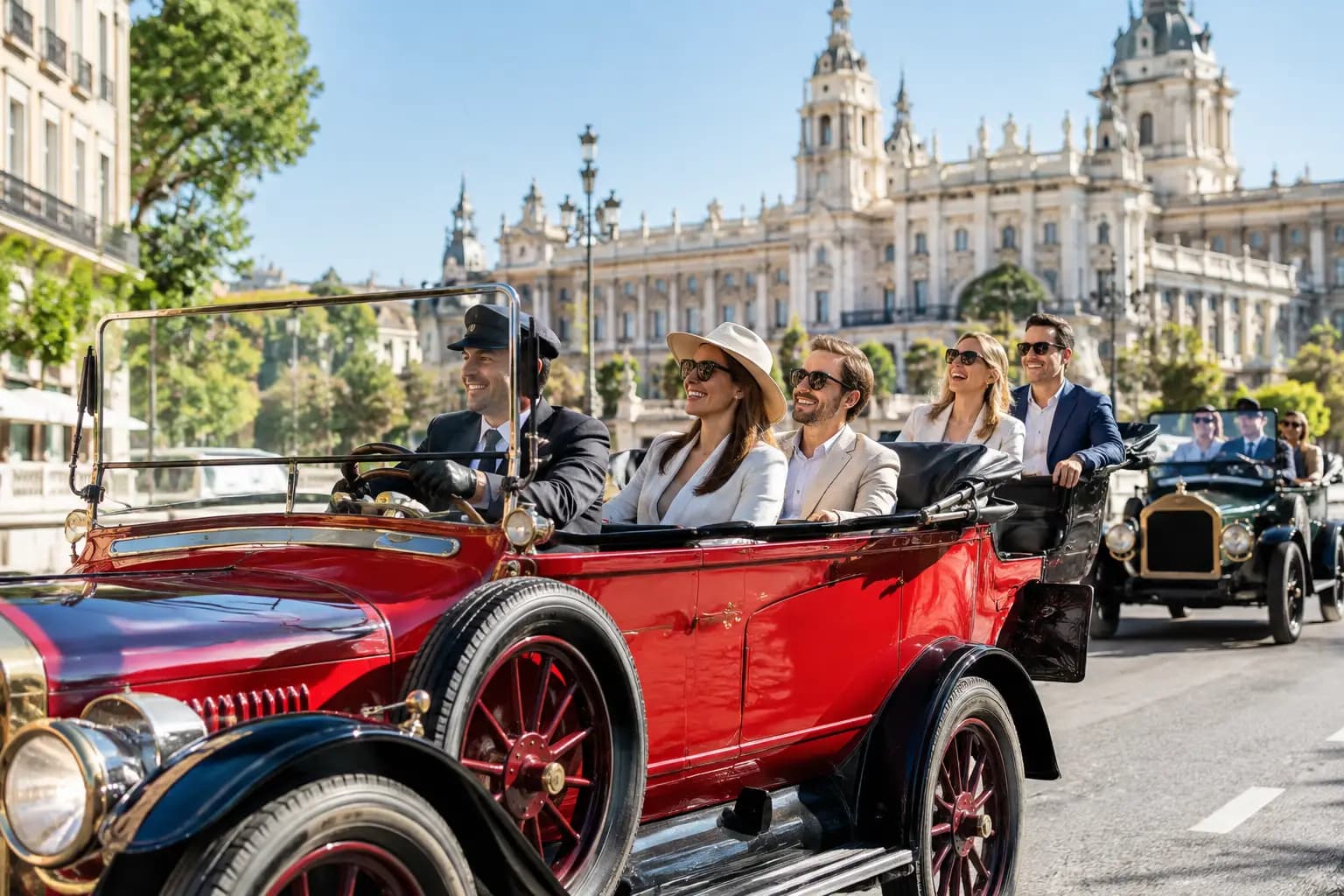
The experience becomes especially distinctive in a historic vehicle. With Retro Tour Madrid, a private drive in an iconic 1920 Ford Model T transforms the intervals between plazas, parks, and neighborhoods into part of the occasion. It is a graceful alternative to crowded tours and a striking setting for photographs, whether the day begins at a five-star hotel or ends at a restaurant chosen for the evening.
This is not about racing from landmark to landmark. It is about arriving well. A classic car suits travelers who want to see more of central Madrid while preserving the feeling of a private day: no shared itinerary, no fixed commentary delivered through a headset, and no need to decide whether to walk another mile.
Build an Itinerary Around What You Want to Remember
The strongest private itineraries are shaped by mood. A couple on a celebratory trip may prefer sunset at the Temple of Debod, an elegant cocktail, and a quiet drive through illuminated Gran Vía. A first-time visitor may want Madrid de los Austrias, Retiro Park, and the grand avenues near the Puerta de Alcalá. Repeat guests often find greater satisfaction in La Latina, Barrio de las Letras, and the less obvious viewpoints that give the city texture.
Think also about the photographs you want to take. Madrid rewards wide city scenes, but its best images are often smaller: hands around an aperitif, a vintage car waiting beside a stately façade, a balcony filled with geraniums, or the warm reflection of late sun on stone. A private itinerary allows time for these details instead of treating them as delays.
Weather and season should guide the plan. Summer calls for an earlier start, shaded stops, and a long midday lunch before an evening return to the streets. In winter, the lower light lends itself beautifully to historic squares and candlelit dining. Spring and fall offer the easiest conditions for combining parks, neighborhoods, and outdoor terraces in one day.
Leave Room for One Unplanned Stop
The most polished day in Madrid should still have a little spontaneity. Ask your host or driver where they would pause if the light is particularly beautiful, where to find a quieter square near your next destination, or whether a neighborhood is at its best now or an hour later. Those small adjustments are often what make a private experience feel genuinely personal.
Leave one hour unclaimed in your schedule. Use it for a terrace in Barrio de las Letras, a final photograph overlooking the city, or an unhurried arrival at dinner. Madrid does not need to be collected. It asks to be enjoyed, one elegant moment at a time.
Ready to explore Madrid in a Ford T?