
Plan the Atocha to Retiro route with an eye for Madrid’s grand avenues, art-filled corners, garden gates, and an elegantly unhurried arrival in the city today.
The Atocha to Retiro route is short on a map, yet it holds one of Madrid’s most graceful transitions. Within a few minutes, the energy of the city’s principal rail station gives way to leafy promenades, museum façades, and the quiet theater of Retiro Park. For travelers who prefer to arrive somewhere beautifully rather than simply get there, this is a small but memorable passage through the capital.
It is especially suited to a first morning in Madrid, a late-afternoon pause between gallery visits, or the opening chapter of a private sightseeing experience. The route can be walked, of course. But its real appeal lies in allowing time for the details: the glass-and-iron architecture of Atocha, the stately line of Paseo del Prado, and the promise of gardens beyond the park gates.
Why the Atocha to Retiro Route Feels So Distinctive
Madrid is often admired for its grand gestures: broad boulevards, royal palaces, monumental squares. Between Atocha and Retiro, those gestures become more intimate. A traveler leaves the station at the southern edge of the Art Walk, with some of the city’s most celebrated cultural addresses close at hand, and approaches a park that has long served as Madrid’s outdoor salon.
The distance itself is modest. From Atocha Station to the nearest entrances of Retiro Park, the walk may take around 10 to 15 minutes, depending on the exit and the gate you choose. Yet the most rewarding version is rarely the fastest. A direct line is practical for guests heading to a reservation or a scheduled museum visit. A more considered route, following the avenues around the Prado, offers a richer sense of place.
For couples and private travelers, this is where Madrid begins to feel cinematic. Sunlight catches the pale façades along the boulevard. Taxi doors close, café terraces fill, and the city moves at a composed pace beneath the plane trees. Even on a busy day, the transition toward Retiro has an almost ceremonial quality.
Begin at Atocha With a Moment of Perspective
Atocha is more than a transport hub. Its historic station building, with its dramatic iron roof and tropical interior garden, offers an unexpectedly elegant first impression. Before heading out, take a moment to notice the shift from the enclosed greenery of the station to the open city beyond it. It sets the tone for the route ahead.
The most polished departure point depends on what follows. Guests arriving by high-speed train may want a private car waiting near their preferred pickup point, allowing luggage to be handled discreetly before continuing into central Madrid. Those already staying nearby can begin on foot, particularly in the cooler morning hours or near sunset.
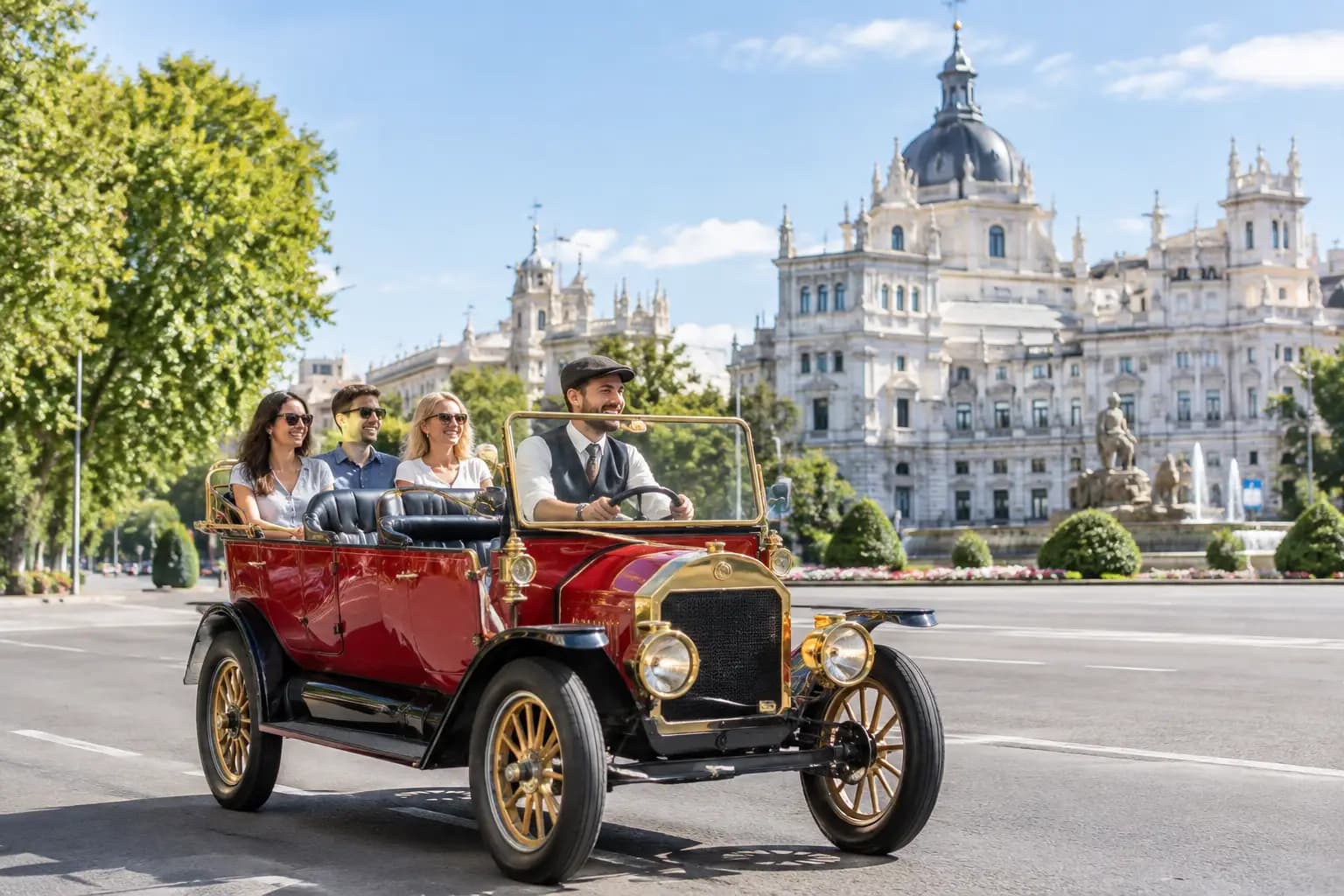
A vintage car is not necessary for such a short stretch, but it can transform the journey when it forms part of a wider itinerary. The appeal is not speed. It is the pleasure of seeing Madrid framed by polished chrome, leather seating, and the measured rhythm of a classic automobile. With a private experience, the route can continue naturally toward the Prado, Barrio de las Letras, Salamanca, or a final stop chosen around the guest’s plans.
Choose Your Route According to the Mood of the Day
There is no single correct Atocha to Retiro route. The best choice depends on whether you are looking for ease, art, photography, or a more celebratory arrival.
The direct garden approach
For the simplest passage, leave Atocha and head toward the southern or western side of Retiro Park. This is ideal when the park is the destination itself: perhaps you have planned a relaxed walk, a rowboat ride on the Estanque Grande, or lunch nearby. It is also practical in warmer months, when getting under the park’s shade sooner can make a meaningful difference.
The trade-off is that a direct route reveals less of the architectural drama that makes this area special. It is efficient, but not necessarily the most evocative choice.
The art-and-avenue approach
A more elegant alternative follows Paseo del Prado, where the city’s cultural identity is displayed with assurance rather than spectacle. The Prado Museum, the Thyssen-Bornemisza Museum, and the Reina Sofía are not all on the same block, but this corridor connects them into a compelling afternoon of art and city life.
From here, approach Retiro via the park’s grander western entrances. The transition is particularly lovely in the late afternoon, when the boulevard softens and the gardens seem to draw the city inward. Allow extra time if you are traveling with a photographer or simply enjoy stopping when the light is right.
The private panoramic approach
For guests who value comfort and a fuller view of Madrid, the route becomes part of a wider private drive rather than a point-to-point transfer. A chauffeur can collect you from a hotel, restaurant, apartment, or central location, then shape the journey around your pace. A brief passage through the Atocha area can lead along the Art Walk before arriving at Retiro for a stroll, photographs, or a private moment away from the city’s busier streets.
This option is especially fitting for anniversaries, proposals, milestone birthdays, and first visits when every hour matters. Retro Tour Madrid can tailor that rhythm around what you want to see, leaving room for the unscripted moments that often become the most vivid memories.
The Best Stops Between Atocha and Retiro
The route is not about checking off attractions. Its pleasure comes from choosing one or two stops that suit the day. Art lovers may prefer an early museum entry before entering the park. Design-minded travelers may linger over the surrounding architecture and the small visual details often missed from a standard coach tour.
Inside Retiro, the Palacio de Cristal is the natural focal point for many visitors. Its glass structure beside the water has a light, almost dreamlike presence, particularly on a bright day. The Monument to Alfonso XII and its grand colonnade offer a more formal setting, with views across the park’s lake and ample space for photographs.
The Rose Garden is lovely in season, while the quieter paths farther from the main entrances reward guests who do not need to hurry. Retiro is large enough to feel different with every visit. A private guide or driver can make the arrival effortless, but the park should still be experienced at an unhurried pace.
Timing, Comfort, and Small Details That Matter
Morning is best for a calm park visit, softer light, and a quieter atmosphere around Atocha. Late afternoon has a more romantic character, especially from spring through early fall, although Retiro’s most popular areas can be lively at that hour. Weekdays usually provide a more relaxed experience than weekends.
Madrid’s climate deserves some consideration. In July and August, the route is more enjoyable before midday or closer to sunset. In winter, clear skies can make the boulevard and park feel wonderfully crisp, though an extra layer is wise after dark. Comfortable shoes are useful if you plan to walk beyond the main paths, even if most of the route is completed by car.
For an elevated visit, avoid trying to fit every museum and every park landmark into one afternoon. Choose an anchor: a major exhibition, a lingering lunch, a private drive, or a garden walk. Madrid rewards discernment. The city becomes more luxurious when there is space to notice it.
Let Retiro Be the Beginning, Not the Finish
Arriving at Retiro need not mark the end of the day. From the park, Madrid opens in several appealing directions. The refined streets of Salamanca are close for shopping or an elegant dinner. Barrio de las Letras offers a more literary, atmospheric turn, while the city center is near enough for a sunset stop on a rooftop terrace.
The Atocha to Retiro route may be brief, but that is part of its charm. It is a passage that asks little of your schedule and gives back a sense of Madrid at its most poised. Leave enough room for a pause at the park gates, a photograph without an audience, or a change of plans prompted by the afternoon light. Those are the details that make a journey feel truly your own.
Ready to explore Madrid in a Ford T?