
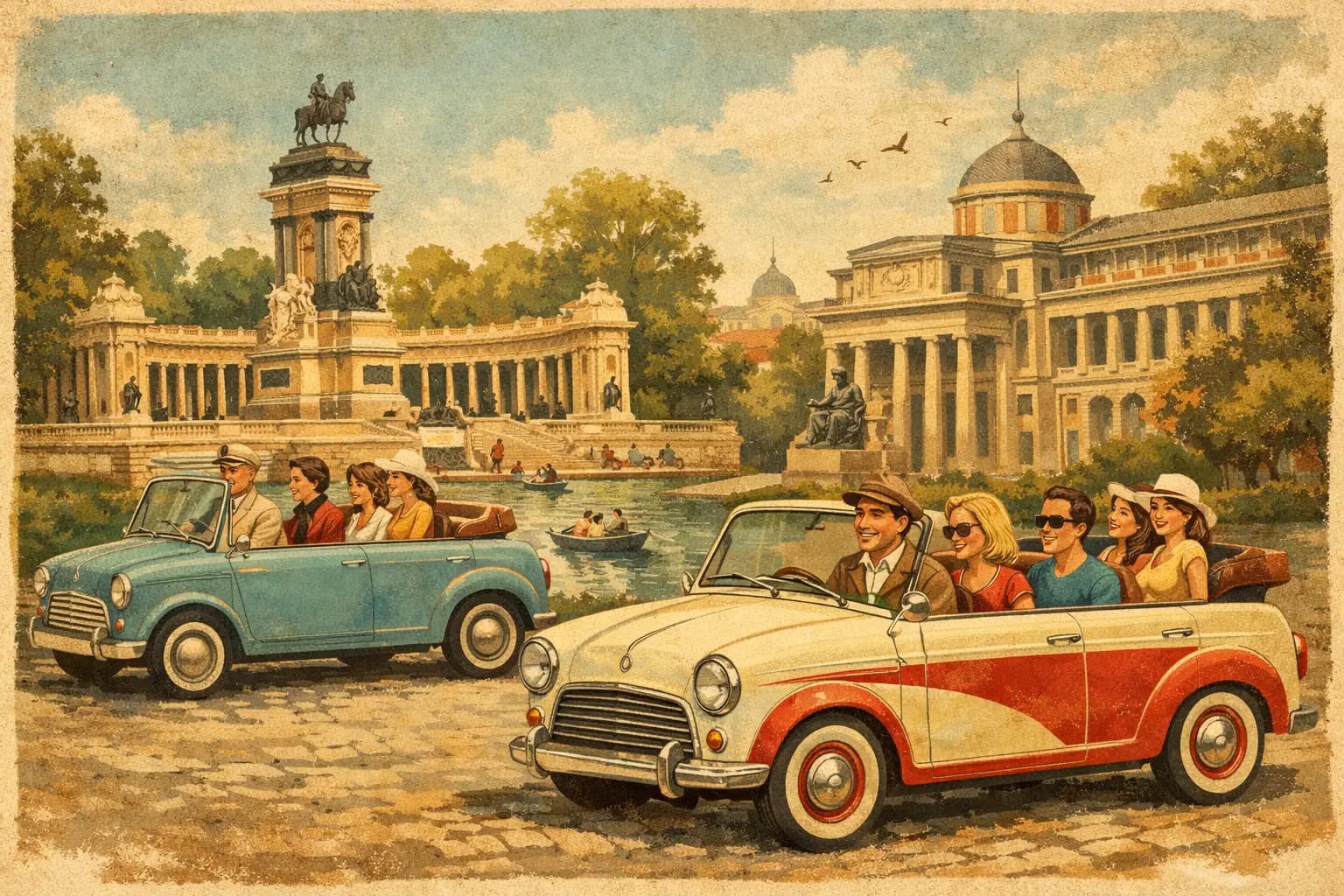
A guide to Retiro and Prado for a graceful Madrid day: masterpieces, shaded paths, private pacing, and elegant stops made for unhurried travel in style.
Madrid offers few pairings as naturally elegant as the Prado Museum and El Retiro Park. This guide to Retiro and Prado is designed for travelers who would rather experience the city at a considered pace: beginning with Spain’s great painters, then stepping into a landscape of chestnut trees, still water, and grand 19th-century architecture.
They sit side by side on Madrid’s eastern edge, yet they reward different moods. The Prado asks for attention. Retiro invites you to let your shoulders drop. Together, they make a beautiful half-day or a full day, particularly for couples and private travelers who prefer a thoughtfully composed itinerary over a rushed checklist.
Begin at the Prado with intention
The Museo Nacional del Prado is not a museum to conquer. Its collection is vast, and attempting to see every gallery can turn a remarkable visit into an exercise in endurance. The more luxurious approach is to choose a small number of rooms and give them time.
Arrive close to opening, when the museum is at its most serene. Mornings offer the best chance to stand before a painting without a crowd gathering at your shoulder. If your schedule allows, reserve roughly two hours for a focused visit, or three if art is central to your time in Madrid.
The Prado is renowned for Spanish masters, and with good reason. Velázquez’s Las Meninas has a presence that reproductions cannot convey: its scale, shadow, and strange intimacy reveal themselves gradually. Goya’s work shifts the atmosphere entirely, from the courtly poise of his portraits to the unsettling force of the Black Paintings. El Greco, Ribera, Titian, Rubens, and Bosch add further depth to a collection that feels less like a survey of European art than an encounter with the ambitions of an empire.
A private guide can be particularly valuable here. Not because every painting needs an explanation, but because the right stories create a thread through the galleries: royal patronage, personal rivalries, changing ideas of power, beauty, and faith. If you prefer to wander independently, choose a few artists before you enter and let the rest be a pleasure rather than a duty.
A note on timing and comfort
The Prado is popular throughout the year. Weekday mornings are generally calmer than weekend afternoons, while the final free-entry hours tend to draw larger lines and a quicker pace. For a visit that feels composed, timed admission and an earlier arrival are worth arranging.
Wear comfortable shoes, even if the day calls for a polished look. The museum’s rooms are generous, but the cumulative distance can surprise visitors. A light layer is useful as well, particularly in warmer months, when Madrid’s outdoor heat contrasts with the museum’s cool interiors.
From Prado to Retiro: a graceful transition
Leaving the Prado, resist the urge to hurry straight into the park. The area around the museum is part of Madrid’s Paseo del Arte, where tree-lined avenues and stately façades lend the city a ceremonial quality. The nearby Neptune Fountain offers a classic photo stop, especially in the softer light of morning or late afternoon.
From here, Retiro is only a short walk away. For those arriving by private car, this transition can be even more effortless: a discreet pickup near the museum, followed by a scenic route around the park’s perimeter before entering on foot at the most suitable gate. Retro Tour Madrid can tailor this kind of journey around the rhythm of a museum reservation, a hotel departure, or an afternoon table elsewhere in the city.
The point is not to fill every minute. It is to make the movement between places feel like part of the experience.
A Guide to Retiro and Prado at a slower pace
El Retiro was once reserved for Spanish royalty. Today, it belongs to the city, but it has retained an air of occasion. Early in the day, runners pass quietly along the paths and gardeners tend the beds. Later, families, musicians, readers, and friends settle beneath the trees. The park is lively, though its scale always leaves room for privacy.
Enter with a simple plan rather than a strict route. The park covers more ground than it first appears, and its appeal lies partly in leaving space for a detour. A leisurely walk of 60 to 90 minutes is ideal for most visitors after the Prado.
The Estanque Grande, or Great Pond, is Retiro’s grandest scene. The Monument to Alfonso XII rises above the water in pale stone, and rowboats cross the surface beneath the open Madrid sky. Renting a boat is charming on a mild weekday, but it is less appealing when lines are long or the midday sun is intense. In summer, a shaded stroll is often the more refined choice.
From the pond, continue toward the Palacio de Cristal. Built in 1887, its iron frame and glass walls were inspired by London’s Crystal Palace. It stands beside a small lake, framed by cypress trees and weeping willows, and has a quiet cinematic quality even when there are other visitors nearby. The building’s interior is occasionally closed for installations or conservation, but the exterior alone merits the walk.
The Palacio de Velázquez, another elegant exhibition space within the park, offers a more secluded pause. Nearby paths lead through changing gardens, formal statues, and unexpected corners where Madrid feels briefly removed from its own center.
Where to pause
Retiro is best enjoyed with restraint. Do not try to photograph every fountain or find every monument. Choose a bench under the trees, order a coffee at a nearby terrace, or simply walk without consulting a map for ten minutes.
For a more celebratory day, plan a late lunch after the park rather than during it. The neighborhoods around Jerónimos, Barrio de las Letras, and Salamanca offer distinct atmospheres, from historic streets to refined dining rooms. Your final destination can be chosen to match the occasion, whether that means a quiet table, a return to your hotel, or a sunset drive past Madrid’s illuminated boulevards.
How to shape the day around the season
Spring is Retiro at its most romantic. Blossoms, fresh green foliage, and comfortably warm afternoons make the museum-and-park combination especially appealing. It is also a busy season, so early reservations and a morning Prado visit matter more.
Summer requires a different strategy. Start at the Prado when doors open, then move through Retiro before the strongest heat. A long lunch indoors or a hotel break can divide the day beautifully, with the park revisited in the evening when the light turns golden and the temperature softens.
Autumn has a quieter elegance. The leaves deepen in color, the galleries feel more inviting, and the city regains its walking rhythm. Winter can be equally rewarding for travelers who favor atmosphere over warmth: begin with the Prado’s luminous interiors, then take a brief, brisk walk through Retiro before settling somewhere comfortable for lunch.
Details that make the experience feel private
The finest version of this itinerary is not necessarily the most elaborate. It is the one that leaves room for your own interests. An art collector may devote the morning almost entirely to Velázquez and Goya. A couple on a first visit to Madrid may prefer one unforgettable hour at the Prado, followed by a private photo stop at the Crystal Palace and an unhurried lunch.
Photography is welcome in many areas of the museum under current visitor rules, but flash, tripods, and certain galleries may be restricted. In Retiro, the best images usually come from patience rather than posing. Walk a little beyond the main pond, wait for a clear path, and let the architecture and trees do the work.
Madrid is at its most persuasive when it does not need to announce itself. Give the Prado your attention, give Retiro your time, and allow the space between them to become part of the memory.
Prêt à explorer Madrid en Ford T ?