
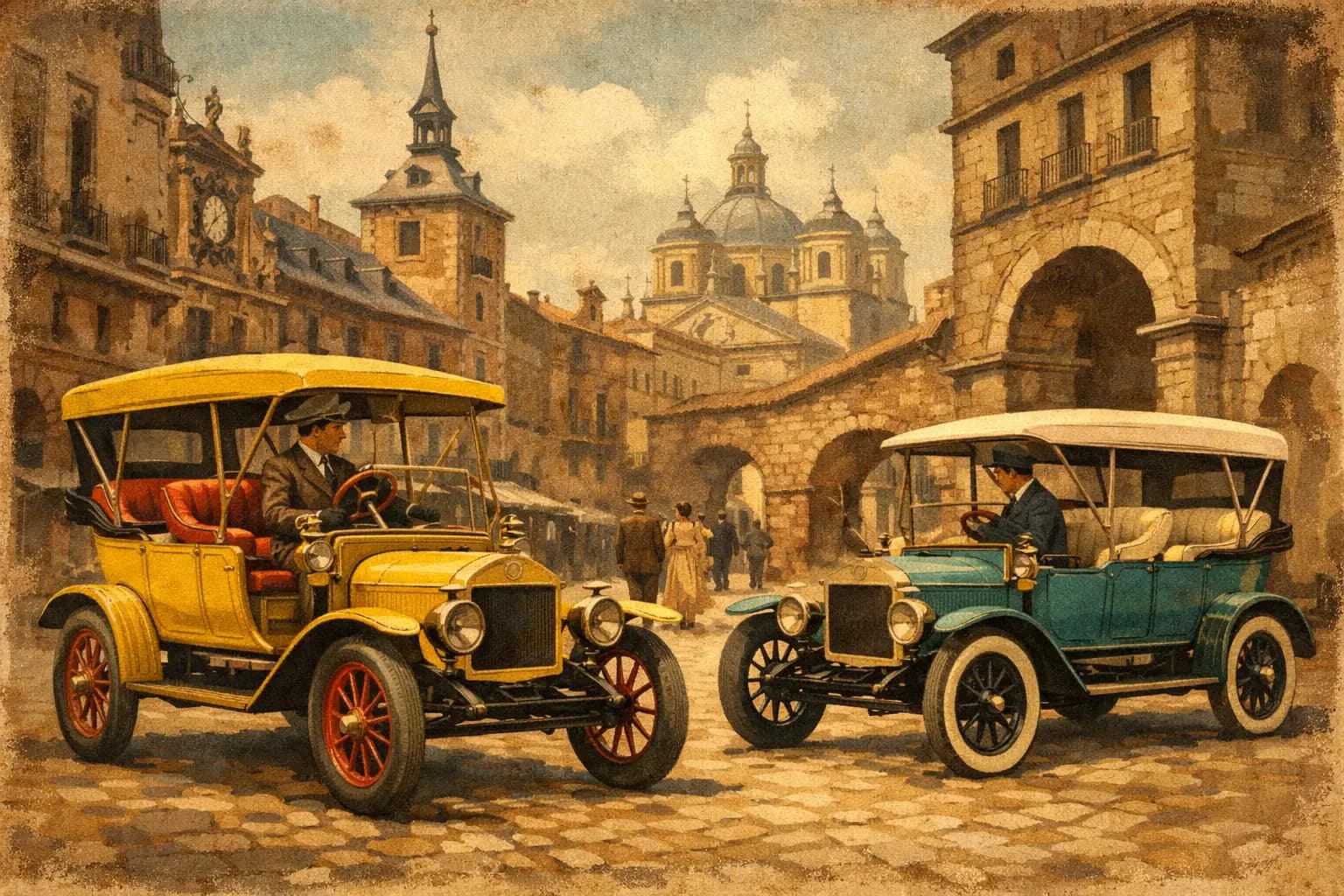
Ruta por el Madrid antiguo con paradas clave, historia y rincones con encanto para descubrir la capital con calma, elegancia y otra mirada.
Ruta por el Madrid antiguo con estilo
There is a moment in Madrid when the city changes pace. It happens just after you leave the grand avenues behind and enter the older quarters, where stone façades hold the afternoon light, narrow streets bend unexpectedly, and every corner seems to keep a secret. A ruta por el Madrid antiguo is not simply a way to see monuments. It is a way to feel the city’s oldest pulse - intimate, theatrical and quietly magnificent.
For travellers who prefer depth over haste, this part of Madrid offers something rare. It is historic without feeling staged, elegant without trying too hard, and full of contrast. In a few streets, you move from medieval traces to Habsburg grandeur, from convent walls to royal squares, from hidden taverns to noble buildings that have witnessed centuries of ceremony and intrigue.
Why a ruta por el Madrid antiguo still feels special
Old Madrid is not preserved in glass. It is lived in. That is part of its charm, and also part of the reason it rewards a more considered visit. You are not walking through a museum district with a single storyline. You are passing through layers of power, faith, trade, ritual and everyday life, all compressed into a remarkably walkable heart of the city.
The appeal lies in the texture. Plaza stones worn smooth by generations. Iron balconies that catch the late sun. Church bells in the distance. Doorways so discreet you could pass them three times without noticing what lies beyond. This is a route best enjoyed without rush, because the value of the experience is not only in what you see, but in how you are invited to look.
For visitors staying in Madrid for a short break, this area also offers a practical advantage. Many of its most important landmarks sit close together, which means you can enjoy a richly cultural itinerary without spending the day in transit. Yet compact does not mean simple. The streets can be confusing, the historical context is easy to flatten, and the most memorable details are often the least obvious. That is why the route matters.
The essential route through old Madrid
A refined ruta por el Madrid antiguo usually begins where the city still performs its public life with confidence - Plaza Mayor. Even now, despite its fame, there are early hours and quieter seasons when the square feels wonderfully composed rather than crowded. Its symmetry, arcades and warm red façades create a dramatic opening scene, but what matters most is what Plaza Mayor represents. This was the stage set of imperial Madrid, a place of ceremony, commerce and spectacle.
From there, the route naturally moves towards the smaller lanes that reveal the city’s older grain. Mercado de San Miguel may draw attention for its lively atmosphere, but look beyond the obvious and the area begins to speak in a subtler register. Cava de San Miguel and the surrounding streets preserve the feeling of a city built before modern planning straightened its edges.
Continue towards Plaza de la Villa, one of the most evocative stops in the old quarter. This square has a quieter authority than Plaza Mayor. Its historic buildings, including Casa de la Villa and the Torre de los Lujanes, suggest a Madrid that predates royal display and belongs to an older civic identity. It is one of those places where the city appears to lower its voice.
A little further on, the route opens into the area around the Royal Palace and Almudena Cathedral. Here the scale changes. The intimate fabric of the medieval streets gives way to ceremony, perspective and stone. If Plaza de la Villa feels introspective, this section feels resolutely regal. The contrast is part of what makes old Madrid so compelling. It does not offer one mood. It offers several, each with its own tempo.
From the palace precinct, drifting down towards the streets of La Latina adds another layer. This district retains one of the most human sides of historic Madrid. There is beauty here, but not only the polished kind. You find sloping streets, traditional façades, old tavern fronts and a lived-in atmosphere that balances the grandeur of the royal quarter. For many visitors, this is where old Madrid becomes most seductive.
What to notice beyond the landmarks
The most rewarding routes are never only about ticking off the recognised sites. In old Madrid, the real distinction lies in the details between them. A carved coat of arms over a doorway. A convent wall that runs longer than expected. A view that suddenly frames a dome, a bell tower or a palace cornice with cinematic precision.
Look at the proportions of the streets. Some remain notably narrow, revealing the medieval footprint of the city before it expanded with royal ambition. Notice how the materials shift from one building to the next. Brick, granite, wrought iron and timber all contribute to the visual language of the neighbourhoods.
Then there is the atmosphere of transition. In old Madrid, one street can feel solemn and monastic, while the next opens into a square full of conversation and light. This fluidity is part of the pleasure. It keeps the route from becoming static or overly reverent.
Travellers who appreciate design and storytelling often respond strongly to this area because it does not present beauty in a single polished form. It offers contrast - austere and ornate, intimate and ceremonial, sacred and worldly. That complexity is what gives the route its staying power.
When to do the route for the best experience
Timing changes everything. Early morning brings softness and a welcome sense of possession, especially around Plaza Mayor, Plaza de la Villa and the palace surroundings. The city feels composed, almost private, and the architecture has room to breathe.
Late afternoon can be equally appealing, particularly in cooler months when the light turns golden and façades gain warmth and depth. The older stones of Madrid respond beautifully to this hour. It is also an excellent time for photography, not because the city becomes more dramatic, but because it reveals more of its subtle character.
Midday has advantages if you enjoy atmosphere and movement, though it tends to flatten the quieter qualities that make the route so memorable. It depends on what you want. If your priority is social energy, terraces and a sense of urban theatre, later morning into lunch works well. If you want grace, detail and calm, begin earlier or wait for the light to soften.
On foot or in comfort?
There is no single correct way to experience old Madrid. Walking gives you immediacy. You hear the rhythm of the streets, notice scents from bakeries and cafés, and discover small visual details at your own pace. For many travellers, that intimacy is essential.
At the same time, walking every section is not always the most elegant choice, especially if your day includes several neighbourhoods, formal plans afterwards, or a preference for comfort. Historic districts can be uneven underfoot, streets can become busy, and the practical effort of moving between key points may interrupt the pleasure.
This is where a more considered format can transform the experience. Seen from a beautifully styled vintage vehicle, old Madrid acquires another quality altogether. The route becomes cinematic. Arrivals feel composed. Transitions between intimate streets and grand royal spaces gain a sense of narrative. Comfort is not a minor detail here - it shapes how the city is remembered.
For guests seeking privacy, occasion and a personalised perspective, a private experience with ¿Listo para explorar Madrid en un Ford T?