
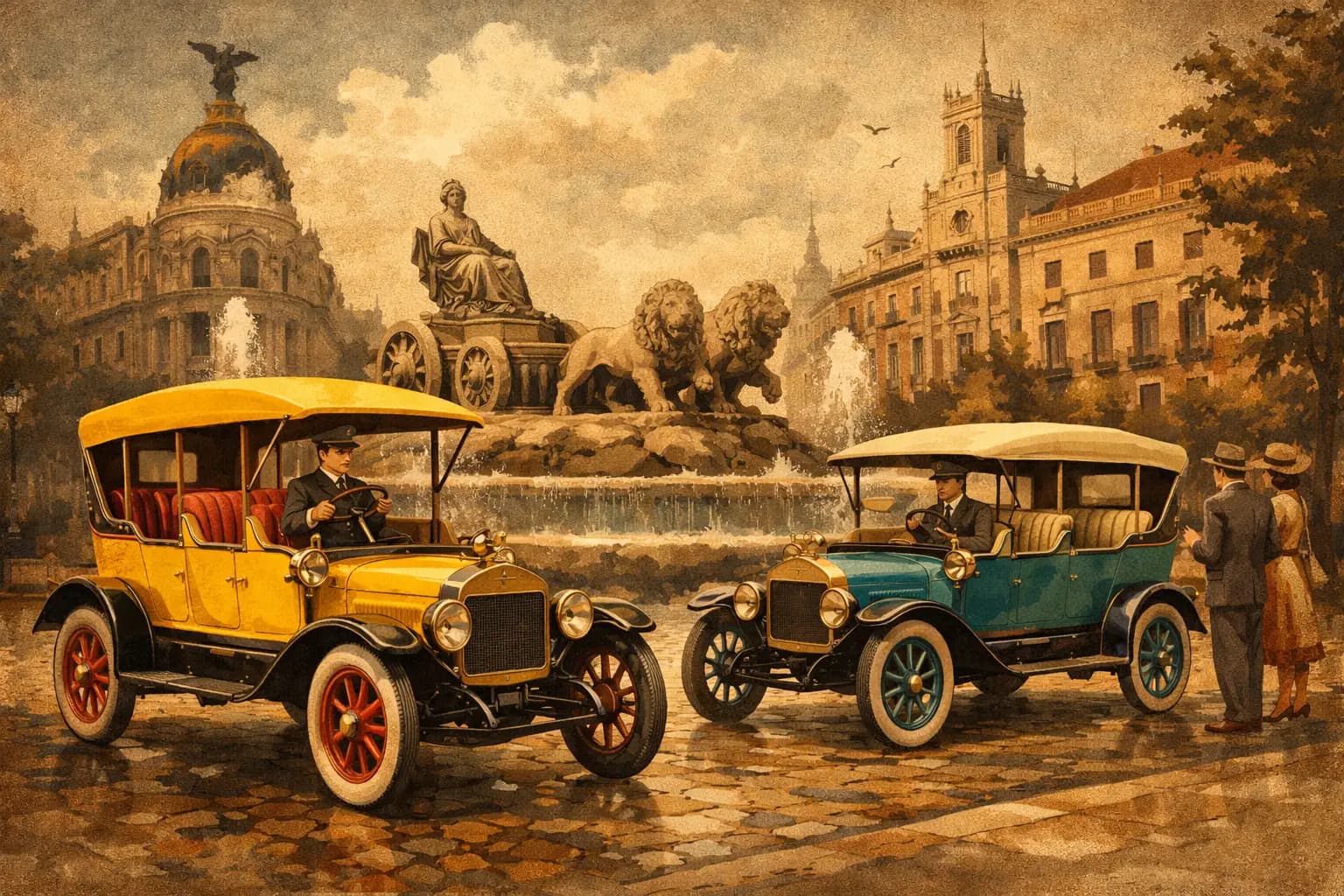
Barrios con historia en Madrid para vivir la ciudad con elegancia: calles con carácter, plazas memorables y rincones con alma propia.
La Latina
La Latina is older than many first-time visitors expect. Beneath its lively reputation lies a medieval layout of irregular streets, small plazas and unexpected turns. It is a district that rewards unhurried attention. One moment you are in a sociable square edged with terraces, the next in a lane that feels almost village-like.
Its appeal rests partly in contrast. La Latina is animated, fashionable and full of life, yet it still carries the structure of an older Madrid. Churches, convent walls and centuries-old routes remain folded into the present. The result is not polished perfection, but something better - authenticity with texture.
For couples and discerning travellers, La Latina often feels most compelling in the early evening. The light softens the brick and ochre tones, and the district begins to glow without losing its local pulse. It is less about major landmarks and more about atmosphere, which is often what stays in the memory longest.
Barrio de las Letras
There are neighbourhoods that impress immediately, and there are those that reveal themselves in a more discreet way. Barrio de las Letras belongs to the second category. Historically associated with Spain’s great writers, this quarter carries its cultural heritage lightly. Literary quotations appear underfoot, elegant façades line the streets, and the entire area seems to favour conversation, reflection and civilised wandering.
Its beauty is not ostentatious. Instead, it lies in proportion, detail and mood. The buildings are handsome rather than overwhelming, the streets lively without being chaotic, and the cafés and galleries contribute to a tone of cultivated ease. For many sophisticated visitors, this is where Madrid feels especially balanced - historic, stylish and deeply liveable.
Among the barrios con historia en Madrid, this one offers a more intellectual form of romance. It suits those who enjoy places with narrative depth, where the charm is inseparable from the stories once lived there. It also sits comfortably within a broader itinerary, close to grand museums yet distinct in character.
The neighbourhoods that show another side of historic Madrid
Not every historic district in Madrid is monumental. Some express their past through refinement, others through resilience, and others through the way old and new coexist without strain.
Salamanca
At first glance, Salamanca may seem too elegant, too orderly, too associated with luxury shopping to belong in a conversation about history. That would be a mistake. This district represents a later chapter of Madrid’s story - its 19th-century expansion into a more modern, aristocratic capital.
Its wide streets, handsome buildings and composed urban design reflect ambition of a different kind. Here, history appears in the form of urban sophistication. Salamanca does not offer the medieval charm of La Latina or the dynastic weight of the Austrias quarter, but it reveals how Madrid learned to project prestige with confidence.
For luxury travellers, this distinction matters. Historic does not always mean ancient. Sometimes it means enduring style. Salamanca is proof that heritage can feel polished, residential and quietly exclusive.
Chamberí
Chamberí is often overlooked by short-stay visitors, which is precisely part of its appeal. It offers a more residential, less performed version of historic Madrid. The architecture is graceful, the pace more measured, and the atmosphere deeply local without being inaccessible.
There is an old-world dignity here. Traditional façades, refined corners and classic cafés give the district a composed charm. It does not announce itself loudly, but for travellers who prefer authenticity over spectacle, Chamberí can be one of the city’s most rewarding discoveries.
This is where the question of taste comes in. If your idea of history is grand squares and royal settings, Chamberí may feel understated. If, however, you value the elegance of a neighbourhood that still lives beautifully, it has much to offer.
Malasaña
Malasaña brings a different energy to the historic map of Madrid. Its past is tied not only to older streets and buildings, but also to moments of cultural change and rebellion. This is a place where history feels less ceremonial and more restless.
Its streets retain plenty of architectural character, yet the district’s identity comes as much from attitude as from stone. Vintage shops, independent spaces and a spirit of creative freedom give Malasaña a layered charm. It is historic, certainly, but not preserved in a formal way.
That makes it appealing to some travellers and less so to others. If you seek quiet grandeur, there are better choices. If you enjoy places where heritage and contemporary culture meet with confidence, Malasaña offers a vivid counterpoint to Madrid’s more stately quarters.
How to experience historic Madrid well
The finest way to understand these neighbourhoods is not to rush between them. Historic Madrid deserves rhythm. A well-planned route allows the city’s transitions to make sense: from imperial formality to literary elegance, from medieval intimacy to residential refinement.
Comfort also changes the experience. In a city with strong light, changing temperatures and streets that invite looking outward rather than downward at a map, ¿Listo para explorar Madrid en un Ford T?