
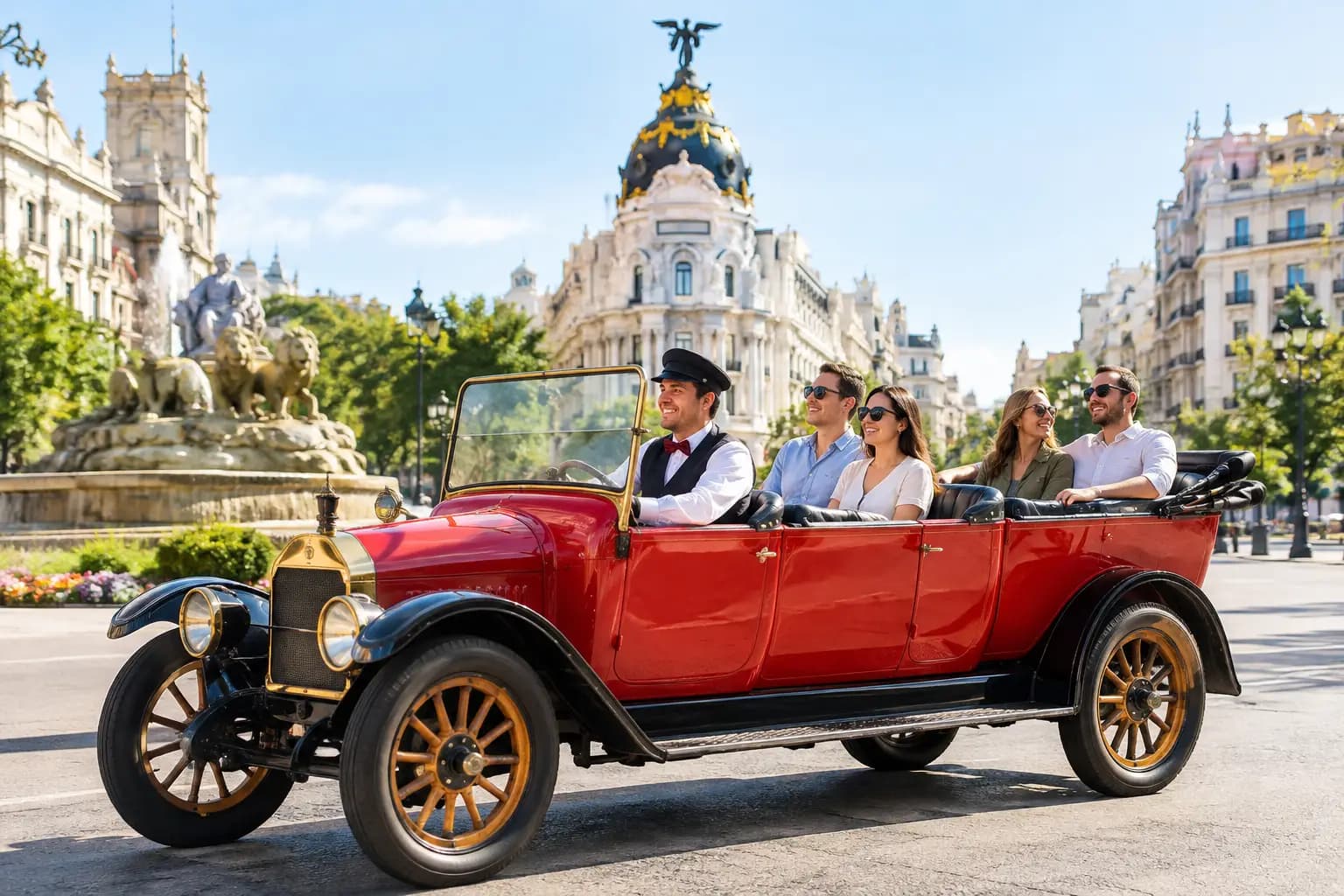
Madrid travel trends 2026 favor private, unhurried days, storied neighborhoods, exceptional tables, and cinematic arrivals for discerning visitors today.
Madrid is becoming less interested in being checked off and more interested in being felt. The defining Madrid travel trends 2026 point toward a more considered kind of visit: private rather than crowded, beautifully paced rather than over-scheduled, and rooted in the city’s character rather than a generic list of sights.
For travelers who choose Madrid’s finest hotels, this is welcome news. The city has always rewarded curiosity, but it now asks for something else as well: time. Time to notice the first light on the façades of Madrid de los Austrias, the late-afternoon energy on Gran Vía, and the hush that settles over Retiro Park before dinner. Luxury here is not simply about access. It is the freedom to experience the city at exactly the right rhythm.
Private experiences take center stage
The broadest shift is away from the shared, fixed-route format. Guests are increasingly choosing experiences shaped around their own interests, schedule, and occasion. A couple arriving for a milestone anniversary may want a graceful introduction to Madrid before a reservation at a celebrated restaurant. A family may prefer an elegant overview that avoids long walks and accommodates different ages. A returning visitor may want to leave the familiar avenues behind and spend an afternoon among quieter corners.
This does not mean Madrid’s landmarks matter less. The Royal Palace, Puerta de Alcalá, Santiago Bernabéu Stadium, and Temple of Debod remain essential references in the city’s visual language. What is changing is the manner of seeing them. Travelers want the story around the landmark, the right vantage point, and the ability to pause when a place feels worth remembering.
Private transport is part of that change. It replaces the compromises of a crowded bus, a brisk walking group, or a functional ride between stops with a more personal passage through the city. In a classic car, the journey has its own presence. There is room for conversation, photographs, and the small pleasure of arriving somewhere with style.
Madrid travel trends 2026 favor the unhurried itinerary
Madrid has never been a city that reveals itself well under pressure. Its most memorable qualities often appear between the headline attractions: a tiled bar façade in La Latina, a literary plaque in Barrio de las Letras, a tree-lined street that leads unexpectedly toward a grand boulevard.
In 2026, thoughtful travelers will increasingly build their days around fewer, better moments. Instead of treating an itinerary as a race, they may choose a late breakfast, a private city drive, an unhurried museum visit, an aperitif, and a long dinner. This pace suits Madrid. The city’s energy rises gradually, then lingers late into the evening.
There is a practical benefit, too. A flexible private itinerary can respond to weather, traffic, opening hours, and mood. Retiro Park may be most appealing in the early morning or near sunset. The light around the Temple of Debod deserves consideration. A neighborhood that feels quiet at noon may be at its most magnetic after dark. The best plans leave space for these adjustments.
For visitors with only one or two days, this approach is especially valuable. Seeing less can produce a far richer sense of place when each stop has context and each transition feels effortless.
Heritage becomes an experience, not a backdrop
Madrid’s appeal lies in its contrasts. Habsburg-era streets meet decisive contemporary architecture. Formal avenues give way to intimate plazas. A city associated with royal grandeur is equally defined by its neighborhood rituals and exacting food culture.
Travelers are responding to heritage with greater discernment. They want to understand the city’s layers, not simply stand in front of them. Madrid de los Austrias offers the drama of older Madrid: narrow streets, arcaded squares, and the enduring presence of the monarchy. Barrio de las Letras brings a different mood, shaped by writers, theaters, and a more intimate urban texture. La Latina feels informal and sociable, particularly when the day begins to soften and terraces fill.
A well-designed route can connect these worlds without making the experience feel academic. It might move from the ceremonial scale of the Royal Palace to a tucked-away street with a story, then continue toward the grand architecture of the modern city. The difference is in the framing. A landmark becomes more compelling when it belongs to a sequence rather than appearing as an isolated stop.
Vintage travel fits this renewed appetite for atmosphere. A 1920s Ford Model T is not merely a charming photograph, although it is undoubtedly one. It creates a conversation between Madrid’s past and present. Against stone façades, elegant hotels, or the curves of a historic avenue, the scene feels naturally cinematic rather than staged.
The new luxury is local knowledge
The most sophisticated visitors are moving beyond the idea that exclusivity means distance from local life. In Madrid, the opposite is often true. The city is most luxurious when it feels personal: a restaurant chosen for a guest’s taste rather than its social media profile, a view timed for the best light, or a final stop that fits the evening ahead.
This is why recommendations matter, but generic recommendations have limits. One traveler may want the grandeur of a classic dining room. Another may be looking for a discreet wine bar, contemporary Spanish cooking, or a rooftop for a first glass of the evening. The right suggestion depends on the guest, not just the address.
The same principle applies to shopping, art, and nightlife. Salamanca may appeal to those drawn to established luxury houses and polished streets. Chueca can offer design, energy, and a more contemporary rhythm. The area around Paseo del Prado suits travelers who want to place art at the center of the day. No neighborhood is universally best. The distinction lies in matching Madrid’s many personalities to the person visiting.
Arrival and celebration become part of the itinerary
A notable theme among high-end travelers is the desire to make the beginning of an experience matter. Rather than meeting at an anonymous corner, guests value a personal pickup from their hotel, apartment, restaurant, or another central Madrid location. It is a small detail with an outsized effect: the city begins at the door, not after a logistical handoff.
This is particularly meaningful for celebrations. Proposals, anniversaries, birthdays, and first visits to Madrid deserve more than efficient transportation. They benefit from a sense of occasion, whether that means a tailored route past the city’s most iconic scenes or a quieter journey designed around shared memories and photographs.
There is also growing appreciation for an open-ended finish. A private tour need not end where it began. It can conclude at a dinner reservation, a gallery, a hotel terrace, or a neighborhood the guest wants to explore on foot. The final destination becomes part of the evening’s arc, not an afterthought.
Photographs become more intentional
Madrid is naturally photogenic, yet the strongest images rarely come from standing in the middle of a crowd. Travelers are seeking photographs with composition, atmosphere, and a sense of story. The city offers no shortage of settings: the symmetry of Puerta de Alcalá, the movement of Gran Vía, the calm geometry of Retiro, or the warm stone of old Madrid at golden hour.
A classic vehicle adds visual distinction without requiring spectacle. It offers an elegant focal point and creates images that feel tied to a particular time and place. For couples, this can turn an afternoon of sightseeing into a visual record of the trip. For families and VIP guests, it provides a more polished alternative to hurried snapshots taken between appointments.
Still, timing matters more than novelty. Madrid’s midday sun can be unforgiving in warmer months, while early evening lends softness and dimension. The most successful photo moments are planned with light, setting, and the guest’s comfort in mind.
What discerning visitors should plan for
The move toward personalized travel brings one trade-off: the best experiences cannot always be arranged at the last minute. Madrid remains wonderfully spontaneous, but private services, sought-after dining rooms, and special access are easier to secure when the key parts of a visit are considered in advance.
That does not require planning every hour. It means identifying the moments that deserve protection: an arrival afternoon, a celebration evening, a private introduction to the city, or a final morning before departure. Leave the rest open. Madrid is generous with surprises when there is room to accept them.
For guests seeking a particularly elegant first impression, Retro Tour Madrid can shape a private route around landmarks, hidden details, preferred photo stops, and the pace of the day. The purpose is not to show every corner of Madrid. It is to make the right corners feel entirely yours.
The finest way to meet Madrid in 2026 may be to resist the urge to hurry. Let the city arrive in fragments: polished chrome against old stone, a boulevard opening ahead, a table waiting at dusk, and one more beautiful street before the evening begins.
Ready to explore Madrid in a Ford T?