
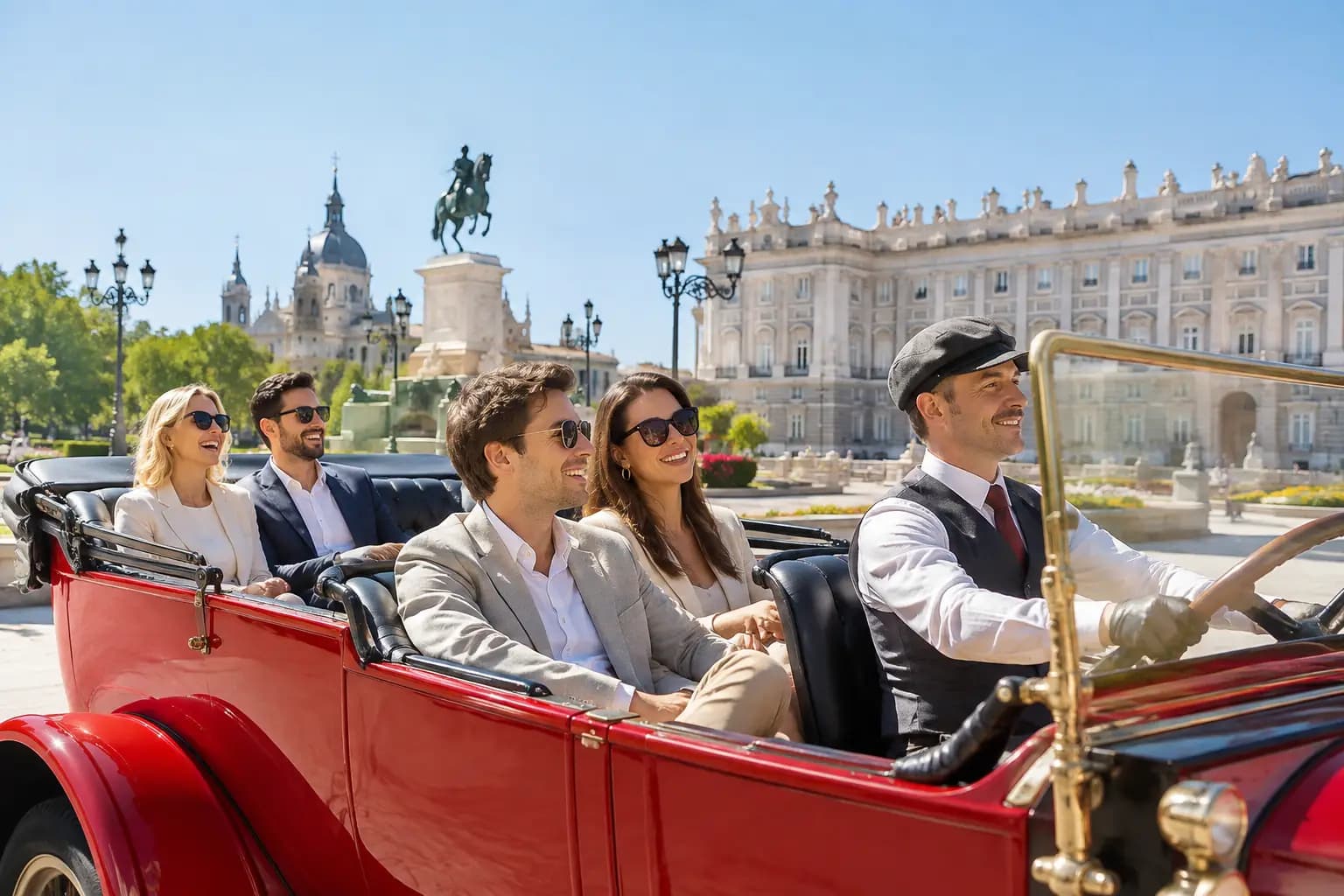
Exploring Madrid de los Austrias reveals royal squares, hidden passages, and old-world grandeur - best enjoyed privately, slowly, and with poise, always.
Madrid’s most regal quarter does not announce itself with spectacle. It reveals itself in a carved stone doorway, a quiet square beyond a busy street, or the sudden silhouette of the Royal Palace at the end of Calle Mayor. Exploring Madrid de los Austrias is an invitation to move at a more elegant pace through the city’s Habsburg heart - with enough time to notice what most visitors pass by.
This is the Madrid of kings, convents, merchants, diplomats, and grand arrivals. Its streets were shaped when the Habsburg dynasty made Madrid the capital of Spain in 1561, and the neighborhood still carries that sense of ceremony. For travelers who value privacy, atmosphere, and a story with depth, it offers a far more intimate encounter with the city than a rushed circuit of headline monuments.
Why Madrid de los Austrias Feels Different
The name Madrid de los Austrias refers to the historic center developed under the House of Habsburg, known in Spanish as the Austrias. Unlike the broad avenues of modern Madrid, this district is defined by narrow lanes, warm brick facades, wrought-iron balconies, and plazas that seem designed for an unhurried pause.
Its beauty lies in contrast. One moment, you are beside the monumental façade of the Royal Palace; the next, you are turning onto a lane where centuries of daily life feel close enough to touch. The neighborhood is compact, but it is not small in character. A thoughtful route makes room for both its celebrated landmarks and its quieter corners.
For a private experience, the difference is profound. Rather than following a fixed flag through crowded streets, you can linger where the light is beautiful, pause for photographs without an audience, or adjust the route to suit a particular fascination - royal history, architecture, gastronomy, or simply the pleasure of seeing old Madrid unfold from a classic car.
The Essential Places to See
Plaza Mayor: Madrid’s Grand Outdoor Salon
Few spaces capture imperial Madrid as immediately as Plaza Mayor. Commissioned under Philip III and completed in the early 17th century, its uniform red façades and arcaded walkways create a theatrical sense of enclosure. It has hosted markets, royal ceremonies, bullfights, festivals, and less graceful chapters of history.
Today, the square rewards an early or late visit, when its scale becomes easier to appreciate. The central statue of Philip III, the slate roofs, and the rhythm of the arches offer a setting that feels distinctly Madrid. The trade-off is simple: it is one of the city’s most visited places, so timing matters. Arriving outside the busiest midday hours brings back some of its old-world calm.
Plaza de la Villa: A More Intimate Madrid
A short distance away, Plaza de la Villa offers a quieter kind of grandeur. Before Madrid had a formal city hall elsewhere, this was the seat of civic power. Its buildings span several architectural periods, yet the square feels remarkably composed, almost cinematic in its proportions.
This is where a private itinerary earns its value. Large groups often pass through quickly, but the small details deserve attention: the stone balconies, the noble crests, the narrow approach from Calle Mayor. It is a natural place to stop, take a portrait, and let the neighborhood’s atmosphere settle in.
The Royal Palace and Almudena Cathedral
The Royal Palace stands at the western edge of Madrid de los Austrias with the confidence one expects from Europe’s largest royal palace by floor area. Its formal exterior is imposing, but the views around it are equally compelling. From the adjoining plaza, the city opens toward the Casa de Campo and the distant horizon beyond Madrid.
Across from the palace, Almudena Cathedral introduces a different rhythm. Its construction stretched across more than a century, resulting in an eclectic appearance that some visitors find surprising beside the palace’s neoclassical authority. That contrast is part of the appeal. Madrid has never been a museum piece; it is a capital that has continued to evolve around its historic core.
Calle Mayor and the Hidden Passages
Calle Mayor provides one of the district’s most elegant threads, connecting Puerta del Sol with the royal precinct. Look beyond the traffic and storefronts, and it becomes a corridor of history. Arcades, churches, discreet plaques, and side streets all lead toward fragments of earlier Madrid.
The real pleasure comes from slipping off the main route. Near the old city walls, around Plaza de Oriente, and in the streets descending toward La Latina, the architecture becomes more personal. You may find a sunlit façade with faded color, a traditional tavern entrance, or a small plaza that seems to belong to the residents who cross it each day.
Seeing the Quarter With the Right Rhythm
Madrid de los Austrias is walkable, but walking is not always the most refined way to experience it. Cobblestones, summer heat, and the natural fatigue of a full day of sightseeing can turn even a beautiful route into an obligation. A private classic car experience creates a graceful alternative: the pleasure of open-air viewing, the ease of moving between key points, and the freedom to reserve your energy for the moments that truly merit a closer look.
A 1920 Ford Model T brings a particularly fitting sense of occasion to these streets. Its presence belongs to the visual language of the neighborhood: elegant but not excessive, historic yet alive. With Retro Tour Madrid, the route can begin at a preferred central hotel, residence, or restaurant, then move through the district at a pace shaped around the guest rather than a timetable.
That personalization matters most for milestone trips. A couple celebrating an anniversary may prefer a quiet morning route with a polished photo stop near the palace. A family with limited time may want Madrid de los Austrias paired with the city’s most iconic viewpoints. Guests with a strong interest in food might finish near La Latina, where an afternoon aperitif or late lunch feels like a natural continuation of the experience.
When to Go and What to Notice
Morning lends the neighborhood a softer, more private mood. Light catches the upper balconies, delivery vans have not yet given way to the full rhythm of visitors, and the plazas feel momentarily reserved for those who arrive early. Late afternoon is equally appealing, particularly in cooler months, when the stone begins to glow and the city transitions toward its famously late evening.
Summer requires a little more strategy. The historic center can be warm and lively, especially around Plaza Mayor and Mercado de San Miguel. A private driving route allows you to enjoy the architecture and atmosphere while limiting long stretches in direct sun. In winter, by contrast, the area has a quieter elegance, and the crisp air makes a warm stop for coffee or churros especially inviting.
As you pass through, look upward. Madrid de los Austrias rewards attention above street level: ironwork balconies, painted ceilings beneath archways, discreet coats of arms, and the changing geometry of rooftops. The most memorable details are rarely the ones announced on a map.
A Neighborhood Best Left With Time to Spare
The temptation in central Madrid is to see everything. Yet Madrid de los Austrias asks for a more selective approach. Plaza Mayor, the Royal Palace, Plaza de la Villa, and Calle Mayor may be essential, but the enduring memory often comes from what happens between them: a quiet turn, a favored view, a photograph taken at exactly the right moment.
Leave room for an unscripted stop. Ask for a route that allows the city to surprise you, then choose an ending that suits the day - perhaps a terrace, a distinguished restaurant, or a final view over the rooftops. In this part of Madrid, the most luxurious thing is not speed. It is the rare privilege of having nowhere to rush.
Ready to explore Madrid in a Ford T?